Rankszo Free Rank Checker: Accurate Rankings Without Paying a Dime
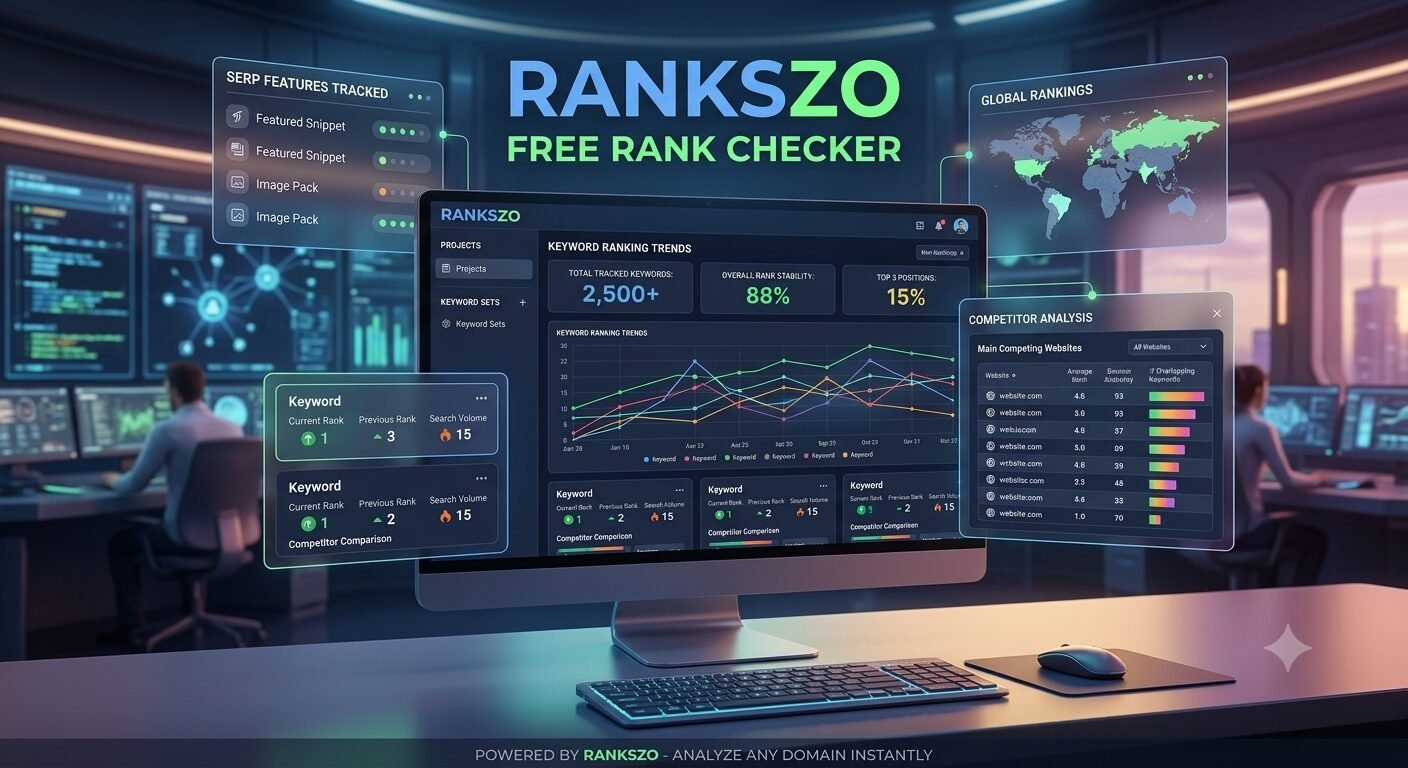
The Rankszo Free Rank Checker offers a simple approach for website owners who want to monitor keyword positions without immediately paying for expensive SEO software. Search rankings are constantly changing. A page can move up or down because of competition, content updates, search intent, algorithm changes, and other factors. Checking those positions regularly can help marketers understand whether their SEO efforts are moving in the right direction.
Rank tracking is especially useful for bloggers, small businesses, agencies, and new website owners. Instead of guessing how a page performs, users can check its position for specific search terms. That information can then guide content updates and optimization decisions.
Free SEO tools can also make search optimization more accessible. Not every website needs an advanced enterprise platform with hundreds of features. Some users simply need a practical way to check important keywords.
The Rankszo Free Rank Checker fits into this type of workflow. Its value comes from making keyword position checking easier and more accessible. However, ranking information should always be treated as a snapshot rather than an absolute guarantee. Search results can vary by location, device, personalization, and search engine conditions.
Why Keyword Rank Tracking Matters
Keyword rankings provide an important view of organic search visibility. When a website targets specific phrases, knowing where its pages appear can help measure SEO progress.
Measuring Search Performance
Imagine publishing an article targeting a competitive keyword. The page may initially appear on the third or fourth page of search results. After improving the content, adding relevant internal links, and making the page more useful, its position may improve.
Tracking allows you to observe that movement.
The most useful approach is to compare results over time. A single ranking does not always reveal much because search positions naturally fluctuate. A longer trend can provide a clearer indication of whether optimization efforts are working.
Finding Pages With Potential
Rank tracking can also uncover pages that are close to achieving better visibility. A page ranking between positions 11 and 20 may already have a foundation worth improving.
Instead of producing another article on the same subject, an SEO professional can examine the existing page. The content might need better coverage, clearer headings, stronger internal links, or a more direct answer to the searcher’s question.
This approach can make SEO more efficient.
Understanding Search Intent
Ranking data can also encourage marketers to examine search intent. If a page struggles to rank despite having strong writing, the problem may not be word count or keyword usage.
The content may simply fail to satisfy what searchers expect.
A rank checker cannot solve that problem by itself. However, it can identify pages that deserve a closer review.
What Makes a Free Rank Checker Useful?
The biggest attraction of a free rank checker is accessibility. Website owners can begin monitoring important keywords without committing to a costly subscription.
A Practical Option for Beginners
SEO can appear complicated when users encounter large dashboards filled with technical metrics. Beginners often need only a few core measurements to get started.
Keyword position is one of them.
A simple rank-checking workflow allows new website owners to learn how search visibility changes. They can compare different pages, observe ranking movements, and understand how optimization affects performance.
This hands-on experience can make broader SEO concepts easier to understand.
Helpful for Bloggers and Content Creators
Bloggers publish content with the expectation that search engines will eventually discover and rank it. Checking keyword positions provides feedback after publication.
If an article performs well, its topic and optimization strategy may offer useful lessons for future content. If another page struggles, the creator can review its structure and search intent.
Over time, this creates a more data-driven content strategy.
Useful for Small Businesses
Small businesses often need to control marketing expenses. Free SEO resources can reduce the initial cost of monitoring search visibility.
A local company might track important service keywords. An online store could monitor product-related terms. A consultant might track phrases connected to professional services.
The exact keywords differ, but the principle remains the same: monitor terms that can contribute to meaningful business results.
How to Get More Accurate Ranking Insights
A rank-checking tool can provide useful information, but accuracy depends on how ranking data is interpreted. Search results are not identical for every person.
Location Can Affect Rankings
Search engines frequently provide location-specific results. A business may rank differently for a search performed in one city compared with another.
This is especially important for local SEO. A restaurant, dentist, repair company, or local retailer should consider geographic differences when evaluating rankings.
For this reason, users should avoid assuming that one ranking represents every searcher.
Device and Search Conditions Matter
Search results can also differ between desktop and mobile devices. Search engines may adjust results based on the user’s context and the type of query.
A ranking check should therefore be viewed as an indication of visibility under particular conditions.
Look at Trends Rather Than Isolated Numbers
One of the biggest mistakes in SEO is reacting to every ranking change.
A keyword can move several positions without any major change to the website. Competitors may update their pages, search results may change, or the search engine may test different result layouts.
Instead of immediately changing content, monitor the trend.
If a page consistently declines, investigate. If it gradually improves, continue the strategy while looking for additional opportunities.
Combine Ranking Data With Other Metrics
Rankings are useful, but they are only one part of SEO measurement.
Traffic can show whether visitors are reaching the website. Impressions can indicate how often pages appear in search results. Click-through rates can reveal how effectively search listings attract attention. Conversions can show whether that traffic produces meaningful results.
Combining these measurements provides a much stronger picture than ranking position alone.
Using Rankszo as Part of a Broader SEO Strategy
A free rank checker should not be treated as a complete SEO solution. Strong search performance depends on many factors.
Build a Focused Keyword List
Start by selecting keywords that genuinely matter to the website. Avoid tracking hundreds of unrelated terms simply because they have search volume.
Relevant keywords are more valuable than random rankings.
Group terms by topic, intent, and importance. This makes ranking changes easier to understand.
Improve Existing Content
Ranking data can reveal opportunities for content updates. Pages sitting just outside the top results may deserve special attention.
Review their accuracy, structure, readability, internal links, and ability to satisfy search intent. Add useful information where necessary rather than inserting keywords repeatedly.
Monitor Competitors Responsibly
Competitor rankings can also provide useful context. If another website consistently outranks yours, examine what makes its content useful.
Look at topic coverage, organization, page experience, and authority. Do not copy its content. Use the information to identify gaps and create something better and more useful.
Keep Expectations Realistic
Free tools can help with monitoring, but no rank checker can guarantee a specific position. Search engines control rankings, and their results change continuously.
The best strategy is to use ranking information as guidance. Combine it with quality content, technical SEO, strong internal linking, authority building, and a good user experience.
Conclusion
The Rankszo Free Rank Checker can be a practical starting point for website owners who want to monitor keyword visibility without spending money on premium SEO software. Its greatest value lies in providing ranking information that can support better decisions.
However, ranking positions should never be viewed in isolation. Search results can vary, and no tool can guarantee a permanent position. The most useful approach is to monitor trends and combine ranking information with traffic, impressions, clicks, and conversions.
For bloggers, small businesses, and SEO beginners, free rank tracking can make search optimization more approachable. By focusing on relevant keywords, studying ranking changes, and improving content based on evidence, website owners can build a more informed SEO strategy.
The goal is not simply to obtain a higher number in a rank tracker. The real goal is to earn greater search visibility, attract relevant visitors, and create content that genuinely satisfies users.
Frequently Asked Questions
What is the Rankszo Free Rank Checker?
The Rankszo Free Rank Checker is intended to help users check keyword positions and monitor how websites appear in search results.
Is the Rankszo Free Rank Checker really free?
The tool is presented as a free rank-checking option. Users should review its current terms and available features before relying on it for large-scale SEO campaigns.
Can a free rank checker provide accurate rankings?
A rank checker can provide useful ranking information, but results may vary because of location, device, personalization, search conditions, and timing.
Why do keyword rankings change?
Rankings can change because of competitor activity, algorithm updates, new content, changes in search intent, technical issues, and fluctuations in search results.
Should I track rankings every day?
Daily monitoring can be useful for major campaigns, but most website owners benefit more from analyzing longer-term trends than reacting to small daily movements.
Are rankings the only important SEO metric?
No. Organic traffic, impressions, clicks, conversions, engagement, and revenue can provide additional information about SEO performance.
Share this content: